If you die without a will, your state's intestacy law decides who inherits whatever you owned in your name alone. Your spouse and children usually come first, then parents, siblings and more distant relatives. A court usually appoints an administrator to pay your debts and hand out the rest, and if no relative qualifies, the state takes it.
This article is general legal information, not legal advice. Laws vary by state and situation, and reading it does not create an attorney-client relationship. For advice about your case, talk to a licensed attorney.
Key takeaways
- Intestacy law only controls property that doesn't pass automatically to a joint owner, a named beneficiary or a trust.
- A spouse's share varies widely: New York gives $50,000 plus half the rest when there are children, while Minnesota gives everything if all your children are also your spouse's and your spouse has no others.
- Unmarried partners, friends, charities and stepchildren you never adopted get nothing under the default rules.
- A court appoints an administrator, usually a close relative; California's courts say formal probate typically takes 9 to 18 months.
- Small estates can often skip full probate, such as California estates up to $208,850 (deaths on or after April 1, 2025) or Florida estates up to $150,000.
- If no relative qualifies as an heir, the estate goes to the state.
Who inherits when there's no will
Your state's intestate succession law is a ranked list of relatives. The list only moves down when nobody in a higher group is alive.
Texas Estates Code section 201.001 shows the order for someone without a spouse. Children and their descendants inherit first. If there are none, your parents split the estate, and if only one parent is alive, that parent shares with your siblings. With no parents, your siblings and their descendants take it all. After that, the estate is split between your father's side and your mother's side, starting with grandparents.
New York (Estates, Powers and Trusts Law section 4-1.1) follows the same path but stops at the children of your first cousins. Texas has no cutoff; its statute keeps moving outward to more distant ancestors and their families.
Some states also require an heir to outlive you by a set time. Minnesota, which titles its probate chapter the Uniform Probate Code, treats an heir who doesn't survive you by 120 hours as if that person died first (section 524.2-104).
Intestacy only reaches your probate estate. An account with a named beneficiary goes to that beneficiary, joint tenancy property goes to the surviving owner, and living trust assets follow the trust. If most of what you own is set up that way, the intestacy rules may control very little.
How much your spouse gets depends on your state
In community property states like California and Texas, your spouse already owns half of the couple's community property, so the statute decides who gets your half and your separate property. Other states use a fixed dollar amount or look at whether there are children from another relationship.
| State and statute | Spouse and children, all from your marriage | Spouse and a child from another relationship | Spouse, no children, a parent still living |
|---|---|---|---|
| California (Probate Code section 6401) | All community property; half of separate property with one child, one-third with two or more | Same as the column to the left | All community property and half of separate property |
| Texas (Estates Code sections 201.002, 201.003) | All community property; one-third of separate personal property plus a life estate in one-third of separate land | Your half of the community property goes to your children; the separate property split is the same | All community property, all separate personal property and half of separate land |
| New York (EPTL section 4-1.1) | $50,000 plus half of the rest | Same as the column to the left | Everything |
| Minnesota (section 524.2-102) | Everything, if your spouse has no children from another relationship | The first $225,000 plus half of the rest | Everything |
Two quick examples show the gap. In New York, debts, administration costs and funeral expenses come out first. If $250,000 is left and you leave a spouse and two children, your spouse gets $50,000 plus half of the remaining $200,000 ($150,000 in all), and your children split $100,000. In Minnesota, if you leave a $400,000 estate, a spouse and a son from a first marriage, your spouse gets $225,000 plus half of the remaining $175,000 ($312,500), and your descendants share $87,500.
A Texas "life estate" means your spouse can use that one-third of your separate land for life, and then it passes to your children. Other states use their own formulas, so check your state's statute or court self-help site before assuming any of these apply to you.

Intestacy statutes are built around marriage, blood and adoption, which leaves out people many families assume are included.
An unmarried partner is the biggest gap. The statutes in the table give a share to a surviving spouse, and a partner you lived with for decades but never married isn't one.
Stepchildren you never adopted are usually left out too. Texas treats a child as a parent's child for inheritance when the parent is a biological or adoptive parent (Estates Code sections 201.051 and 201.052), and a stepparent who never adopted isn't on that list. Friends, charities and the niece who cared for you at the end get nothing unless the statute happens to reach them.
Minor children raise a separate problem, because a will is the usual place a parent names a guardian. Minnesota lets a parent appoint one by will or another signed writing (section 524.5-202) and gives that choice priority when a court acts (section 524.5-204). Without it, a judge decides who raises your children if no parent can.
If no relative qualifies at all, the property goes to the state. Minnesota's statute says so in one sentence (section 524.2-105).
What probate looks like without a will
With no will, there's no executor. Someone has to ask the probate court for authority, and that person is usually called an administrator (some states say personal representative).
In New York, the closest relative generally files a petition for letters of administration in the Surrogate's Court of the county where the person lived, with a certified death certificate and the paid funeral bill. The other heirs get formal notice, called a citation. Each can sign a waiver consenting to the appointment, which may also waive a bond (a kind of insurance that protects the estate), or come to court to object. The filing fee depends on the estate's value. New York's courts also note that real estate passes to the heirs at death, so if a house is the only asset, an administration may not be needed, depending on who survives.
In California, the process starts with a Petition for Probate (form DE-111) in the county where the person lived. The court's self-help guide says the filing fee is typically $435, with fee waivers available. Family members get notice, a notice runs in a local newspaper, and the judge appoints the administrator. That person inventories the assets (form DE-160), notifies creditors (form DE-157), pays valid debts and files a final income tax return before asking the court to approve distribution. The guide puts the usual time at 9 to 18 months and says costs are often well over $1,000, with administrator and attorney fees set by law as a percentage of the estate's value.
For each stage in more detail, read How Does Probate Work? A Step-by-Step Guide.

When the probate estate is small, many states let heirs collect property with an affidavit or a shorter court process. Check what counts toward the limit; California, for example, leaves out joint tenancy property and assets paid directly to a named beneficiary.
| State | Shortcut | Limit | Other rules |
|---|---|---|---|
| California | Small estate affidavit (Probate Code section 13100) | $208,850 for deaths on or after April 1, 2025 | Wait at least 40 days; debts and mortgages can't be subtracted; for those deaths, a separate petition can transfer a main California home worth up to $750,000 |
| Florida | Summary administration (Florida Statutes section 735.201) | $150,000, not counting property exempt from creditors' claims | Also available at any value if the person died more than two years ago; still goes through the court |
| Minnesota | Affidavit to collect personal property (section 524.3-1201) | $75,000 probate estate, after liens | Wait 30 days; no request to appoint a personal representative can be pending or granted |
| New York | Voluntary administration in Surrogate's Court | Less than $50,000 of personal property | Available whether or not there was a will |
These numbers change. California's figures depend on the date of death, and Florida's limit comes from its 2026 statutes, so older guides may list lower amounts. Our Probate Checker gives a quick read on whether an estate is likely to need full probate.
A holiday conversation that saves your family trouble
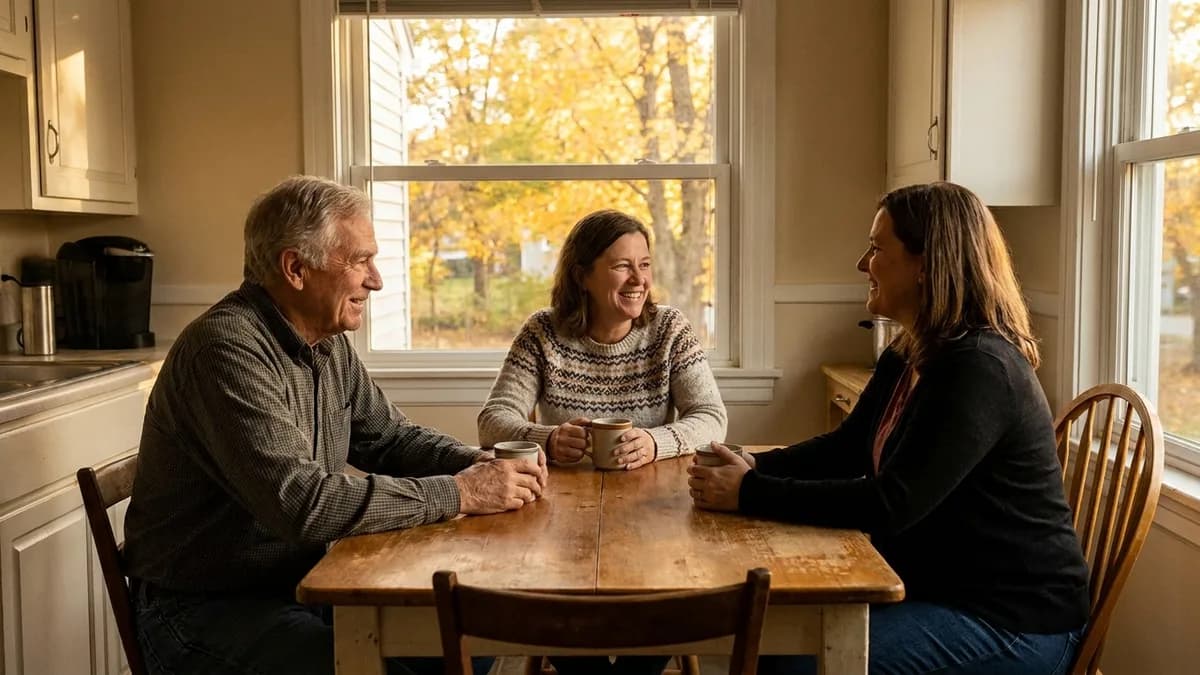
If your family gathers in the next few weeks, it's a natural time to raise this. The questions are simple. Does each adult have a will? Who is named as beneficiary on retirement accounts and life insurance, and is that still right? Who would raise the young children? Where are the important papers?
If an aging parent never wrote a will, the rules above are what will apply, and walking through who would inherit under your state's list is often enough to start the conversation. Our guide Do I Need a Will? Simple Estate Documents Everyone Should Have explains the basic documents.
Check beneficiary forms too. Those accounts pass to the person named on the form rather than through the estate, so an outdated form can send money somewhere you never intended.
When to talk to a lawyer
Some estates without a will can be settled with a small-estate affidavit. Talk to an estate lawyer if any of these apply:
- Relatives disagree about who the heirs are or how much each gets.
- A child from another relationship, a stepchild or an unmarried partner is involved.
- The person owned real estate, especially in more than one state, or a business.
- The estate is over your state's small-estate limit, or debts may exceed the assets.
- An heir is a minor or can't be found.
You can find an estate planning lawyer near you in our directory. If you're not sure the estate needs court at all, start with the Probate Checker.
Frequently asked questions
Does my spouse automatically get everything if I die without a will?
Not always. In Minnesota, your spouse takes everything only if all your children are also your spouse's and your spouse has no children from another relationship; otherwise your spouse gets the first $225,000 plus half the rest. In New York, a spouse with children gets $50,000 plus half the rest. In California, your spouse gets all community property but shares separate property with your children.
Can an unmarried partner inherit if there's no will?
Not under the intestacy statutes covered here, which give shares to a surviving spouse and to blood or adoptive relatives. A partner can still receive property set up outside probate, such as an account that names them as beneficiary or a home you own together as joint tenants. If you want a partner to inherit, a will or those designations are how it happens.
Do stepchildren inherit if there is no will?
Usually not, unless you adopted them. Intestacy statutes pass property to your children and their descendants, and Texas, for example, counts biological and adopted children for inheritance. A stepchild can still inherit from their own parents. If you want a stepchild to receive something from you, leave it in a will or name them as a beneficiary on an account.
What happens if someone dies with no will and no family?
The estate goes to the state, a process often called escheat. Minnesota's statute says that if no heir qualifies, the estate passes to the state. States search a long way first. Texas keeps tracing more distant ancestors and their descendants with no cutoff, while New York stops at the children of the person's first cousins.
How long does probate take without a will?
It depends on the state and the estate. California's court self-help guide says formal probate typically takes 9 to 18 months and sometimes longer. Small-estate shortcuts move faster: if the estate is under the limit, California's affidavit can be used once 40 days have passed since the death, and Minnesota's after 30 days.
Who is in charge of the estate if there's no will?
A court appoints an administrator, usually a close relative. In New York, the closest family member generally files for letters of administration in Surrogate's Court, and the other heirs receive formal notice and can consent or object. The administrator collects the assets, pays valid debts and distributes what's left according to the state's intestacy statute.
Sources & references
- California Legislative Information: Probate Code section 6401
- California Courts Self-Help Guide: When formal probate may not be needed
- California Courts Self-Help Guide: Formal probate
- Texas Estates Code chapter 201: Descent and Distribution
- New York Estates, Powers and Trusts Law section 4-1.1: Descent and distribution of a decedent's estate
- New York State Unified Court System: Administration, when a person dies with no will
- Florida Statutes section 735.201: Summary administration; nature of proceedings
- Minnesota Statutes chapter 524: Uniform Probate Code
Video: A Closer Look
Third-party video for general background. It is not legal advice or an endorsement.
Talk to a Estate Planning attorney near you
This guide is general information, not legal advice. For help with your specific situation, connect with a licensed attorney — many offer a free first consultation.
Find Estate Planning Lawyers Near YouEstate Planning lawyers by state
Firms our directory lists for estate planning in the states where we have the most.