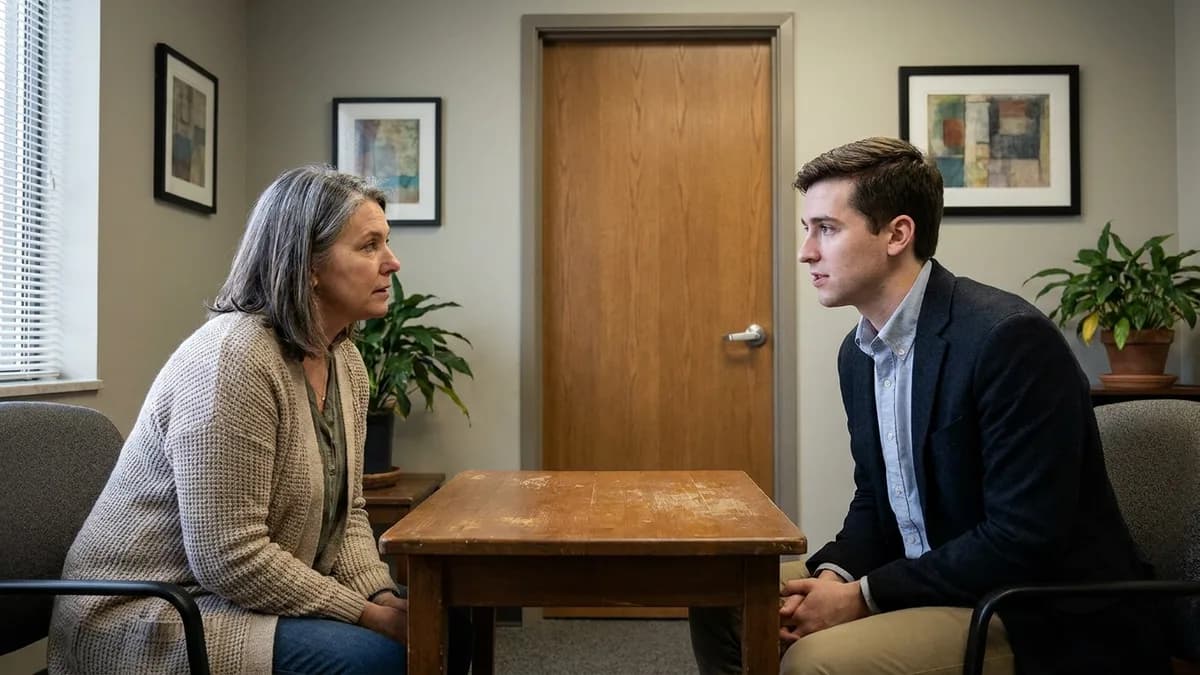
The attorney-client privilege lets you refuse to reveal, and keep others from revealing, what you and your lawyer said in confidence to get legal advice, when a court or agency demands it. Your lawyer's duty of confidentiality is wider: it covers everything about your case, from any source, and the lawyer can't share it unless you agree or an exception applies.
This article is general legal information, not legal advice. Laws vary by state and situation, and reading it does not create an attorney-client relationship. For advice about your case, talk to a licensed attorney.
Key takeaways
- The privilege covers what you and your lawyer say in confidence, not the facts: you can be asked what happened, just not what you told your lawyer.
- Your lawyer's duty of confidentiality under ABA Model Rule 1.6 is broader and covers all information about your case, whatever its source.
- Sharing your lawyer's advice with someone outside the legal team usually waives the privilege for that communication.
- The privilege doesn't cover asking a lawyer for help to plan or commit a crime or fraud.
- The privilege generally survives the client's death, the U.S. Supreme Court held in 1998.
Is this privileged? Ten everyday situations
Results vary by state and by the facts of each case.
| Situation | Usually privileged? | Why | Rule or case |
|---|---|---|---|
| Emailing your lawyer from a work account or work laptop | Depends on the state and your employer's policy | New Jersey's top court protected emails sent from a personal, password-protected Yahoo account on a company laptop; the policy never mentioned personal accounts. A California appeals court refused to protect emails from a company account after the employee was warned it was for business only and could be monitored. | Stengart v. Loving Care Agency, 201 N.J. 300 (2010); Holmes v. Petrovich Development Co., 191 Cal. App. 4th 1047 (2011) |
| Bringing a friend or parent into the meeting | Often not | A third person can make the talk non-confidential. California allows someone "present to further the interest of the client"; Texas is narrower. | Cal. Evid. Code 952; Tex. R. Evid. 503(a)(5) |
| Forwarding your lawyer's email to someone | Usually not, once you send it | Voluntarily sharing a significant part of a privileged communication waives the privilege for it. | Cal. Evid. Code 912(a); Tex. R. Evid. 511(a)(1) |
| Telling your spouse what the lawyer said | Often still protected | A disclosure that is itself privileged isn't a waiver, and private talks between spouses usually are, with exceptions that include a lawsuit between the two of you, crime-fraud, and criminal cases about harm to your spouse or a child. | Cal. Evid. Code 912(c), 980-987; Tex. R. Evid. 504(a), 511(a)(1) |
| Posting about the case online | No | The facts were never privileged, and describing your lawyer's advice in public is a voluntary disclosure. | Upjohn Co. v. United States, 449 U.S. 383 (1981); Cal. Evid. Code 912(a) |
| Talking to the lawyer's paralegal or assistant | Yes | People the lawyer employs to help on your case are covered. | Tex. R. Evid. 503(a)(4), (b)(1); N.Y. CPLR 4503(a)(1) |
| Using an interpreter | Yes, usually | Someone reasonably necessary to get the message across doesn't break confidentiality. | Cal. Evid. Code 952; Tex. R. Evid. 503(a)(5)(B) |
| Asking for help with a future crime or fraud | No | No privilege attaches when a lawyer's services are sought to commit or plan a crime or fraud. | Cal. Evid. Code 956(a); Tex. R. Evid. 503(d)(1); United States v. Zolin, 491 U.S. 554 (1989) |
| The lawyer's billing records | In federal court, mostly not; in California, often yes | Under the federal rule, your identity, the fee and the general purpose of the work usually aren't protected, but entries that reveal your motive, the strategy or the specific services are. California protects invoices for work in pending and active matters. | Clarke v. American Commerce National Bank, 974 F.2d 127 (9th Cir. 1992); L.A. County Bd. of Supervisors v. Superior Court, 2 Cal.5th 282 (2016) |
| The facts themselves vs. the conversation | The conversation yes, the facts no | You can't be made to repeat what you told your lawyer, but a relevant fact doesn't become secret because you told it to your lawyer. | Upjohn Co. v. United States, 449 U.S. 383 (1981) |
Attorney-client privilege vs. the duty of confidentiality
The privilege is a rule of evidence, written into statutes such as California Evidence Code 954 and New York CPLR 4503 or developed by courts. Confidentiality is a professional ethics rule; the version below is ABA Model Rule 1.6, and your state's may be worded differently.
| Attorney-client privilege | Duty of confidentiality | |
|---|---|---|
| Where it comes from | Evidence law: state statutes, court rules and federal common law | Lawyer ethics rules (ABA Model Rule 1.6 and each state's version) |
| When it applies | When someone tries to compel evidence, as with a subpoena, deposition or testimony | Everywhere else too, with no legal proceeding needed |
| What it covers | Confidential communications with your lawyer or the lawyer's staff, made to get legal help | All information relating to your case, whatever its source |
| Main exceptions | Crime or fraud, disputes among heirs of a deceased client, disputes between lawyer and client | Preventing reasonably certain death or substantial bodily harm, certain client crimes or frauds that use the lawyer's services, court orders, and others |
So your lawyer can't discuss your case with a friend over dinner, even details learned from a witness rather than from you. Under Comment 20 to Rule 1.6, the duty continues after the representation ends.

If you hired the lawyer, you're the client, and the privilege is yours to claim or give up. California and Texas also count someone who consults a lawyer about hiring them (Cal. Evid. Code 951; Tex. R. Evid. 503(a)(1)(B)), and ABA Model Rule 1.18 bars a lawyer from using or revealing what a prospective client said even when no hiring follows.
Companies talk to their lawyers through people. In Upjohn Co. v. United States (1981), the company's lawyers investigated payments to foreign government officials with a questionnaire to managers abroad and interviews with employees, and the IRS issued a summons for the results. The lower court had limited the privilege to officers responsible for directing the company's response to legal advice, known as the control group test. The Supreme Court rejected that test and held the answers privileged: the employees spoke to counsel at their superiors' direction, about matters within their jobs, knowing the company wanted legal advice, and the company kept the answers confidential. Texas dropped its own control group test in 1998; its rule now covers any employee who makes or receives a confidential communication to help the company get legal services while acting within the scope of the job (Tex. R. Evid. 503(a)(2)(B)).
If you're the employee being interviewed, the privilege belongs to the company, because a lawyer hired by an organization represents the organization (ABA Model Rule 1.13(a)). The company can assert it or give it up, and in Upjohn the government stayed free to question the employees about the facts. When the company's interests are adverse to yours, Rule 1.13(f) requires its lawyer to explain who the client is. If your own conduct is in question, ask whether you need a separate lawyer.
The crime-fraud exception
In United States v. Zolin (1989), the U.S. Supreme Court said the privilege's reasoning stops where advice turns to future wrongdoing, while confidences about past wrongdoing stay protected. Telling your lawyer what you did last year so they can defend you is covered. Asking for help with a scheme to cheat someone next month isn't.
State versions differ in the details. California removes the privilege when a lawyer's services were sought or obtained to help anyone commit or plan a crime or fraud, with a carve-out for legal work that complies with state cannabis laws if the lawyer also advises on conflicts with federal law (Cal. Evid. Code 956). Texas limits the exception to what the client knew or reasonably should have known was a crime or fraud (Tex. R. Evid. 503(d)(1)). The lawyer doesn't have to be in on it, but a client who reasonably didn't know keeps the privilege.
Zolin also lets a judge review the disputed material privately (in camera) once the challenger offers facts that would lead a reasonable person, in good faith, to believe the review may show the exception applies.
How people waive privilege by accident
A waiver can happen without anyone intending it, through a forwarded email or a relative listening in on a call. The rule is strict. If you, as the holder, voluntarily disclose a significant part of a privileged communication, or consent to someone else doing so, the privilege is gone for that communication (Cal. Evid. Code 912(a); Tex. R. Evid. 511(a)(1)). In California, failing to claim the privilege in a proceeding where you had the chance counts as consent.
Mistakes during a lawsuit get gentler treatment. For disclosures in a federal proceeding or to a federal agency, Federal Rule of Evidence 502 (enacted in 2008) says:
- an inadvertent disclosure isn't a waiver if the holder took reasonable steps to prevent it and promptly tried to fix it, including through the clawback procedure in Federal Rule of Civil Procedure 26(b)(5)(B) (502(b));
- a waiver reaches undisclosed material only if it was intentional, the material concerns the same subject, and fairness requires considering them together (502(a)).
In Texas state civil cases, a party that produced privileged material by mistake keeps the privilege if it amends its discovery response within ten days after discovering the error, or a shorter time the court sets (Tex. R. Civ. P. 193.3(d)). The receiving lawyer has a duty too: under ABA Model Rule 4.4(b), a lawyer who gets a misdirected document must promptly notify the sender. In Stengart, the employer's lawyers broke New Jersey's version of that rule by reading the employee's emails with her lawyer and not promptly telling her.
These rules were written for material exchanged in a lawsuit. An email you chose to forward to a friend is a voluntary disclosure, so build the habits early: reach your lawyer from a personal phone and a personal email account, and ask before you pass any advice along, even to family.

In Swidler & Berlin v. United States (1998), a deputy White House counsel met a private lawyer nine days before his death, and the lawyer took three pages of handwritten notes. An Independent Counsel later subpoenaed them. The Supreme Court, 6 to 3, held the notes privileged, reasoning that clients worried about their reputation, civil liability or harm to friends and family might hold back if their confidences could come out after death. It distinguished will disputes, where disclosure carries out what the client wanted.
State codes fill in the estate rules:
- California gives the privilege to the deceased client's personal representative (Cal. Evid. Code 953(c)) but removes it for communications relevant to a dispute among people who all claim through the client, whether under a will, by inheriting without a will or through a transfer outside probate (Cal. Evid. Code 957). Texas has a similar exception (Tex. R. Evid. 503(d)(2)).
- New York makes the lawyer in a will case, or a revocable trust case after the grantor's death, testify about how the document was prepared, signed or revoked, but not reveal a privileged communication that "would tend to disgrace the memory of the decedent" (N.Y. CPLR 4503(b)).
Questions to raise with your own lawyer
Ask at the first meeting, and again if your employer opens an investigation or someone subpoenas your records:
- Who can be in the room or on the call with us?
- Which email address and phone number should I use to reach you?
- Can I tell my spouse or a family member what you've advised?
- If my employer's lawyer wants to interview me, do I need my own lawyer?
- How much detail will your bills include, and who else might see them?
If you're still choosing someone, our guide on how to choose a lawyer covers what to compare before you hire, or you can find a general practice lawyer near you in our directory.
Frequently asked questions
Does it matter whether my case is in federal or state court?
Yes. Under Federal Rule of Evidence 501, federal courts apply privilege rules the courts develop "in the light of reason and experience." But in a civil case where state law decides the claim, such as a contract dispute, the federal court uses that state's privilege law. State courts follow their own evidence codes.
Is it privileged if the lawyer isn't licensed in my state?
In California and Texas, it can be. Both define a lawyer as someone authorized, or reasonably believed by the client to be authorized, to practice law in any state or nation (Cal. Evid. Code 950; Tex. R. Evid. 503(a)(3)). So a confidential talk with an out-of-state lawyer, or with someone you reasonably thought was a lawyer, can still qualify. Other states define a lawyer in their own evidence codes.
Who has to prove that a communication is privileged?
That depends on the court. In federal-question cases in the Ninth Circuit, the party claiming the privilege has the burden of showing it applies (Clarke v. American Commerce National Bank, 1992). In California, once you show it was a communication made in a lawyer-client relationship, it's presumed to have been made in confidence, and whoever challenges the privilege must prove it wasn't (Cal. Evid. Code 917(a); Costco v. Superior Court, 2009).
Does privilege work differently in a criminal case?
In Texas it reaches further. A client in a criminal case can stop the lawyer, or the lawyer's staff, from disclosing any other fact they learned because of the attorney-client relationship, beyond the communications themselves (Tex. R. Evid. 503(b)(2)). If your case is in another state, check that state's evidence code for a similar rule.
Sources & references
- American Bar Association: Model Rule of Professional Conduct 1.6, Confidentiality of Information
- Federal Rules of Evidence: Rule 501, Privilege in General
- Federal Rules of Evidence: Rule 502, Attorney-Client Privilege and Work Product; Limitations on Waiver
- U.S. Supreme Court: Upjohn Co. v. United States, 449 U.S. 383 (1981)
- U.S. Supreme Court: United States v. Zolin, 491 U.S. 554 (1989)
- U.S. Supreme Court: Swidler & Berlin v. United States, 524 U.S. 399 (1998)
- California Evidence Code sections 950-962: Lawyer-Client Privilege
- Supreme Court of Texas: Texas Rules of Evidence (effective July 2, 2026), Rules 503, 504 and 511
- New York Civil Practice Law and Rules 4503: Attorney
- Supreme Court of New Jersey: Stengart v. Loving Care Agency, Inc., 201 N.J. 300 (2010)
Video: A Closer Look
Third-party video for general background. It is not legal advice or an endorsement.
Talk to a General Practice attorney near you
This guide is general information, not legal advice. For help with your specific situation, connect with a licensed attorney — many offer a free first consultation.
Find General Practice Lawyers Near YouGeneral Practice lawyers by state
Firms our directory lists for general practice in the states where we have the most.