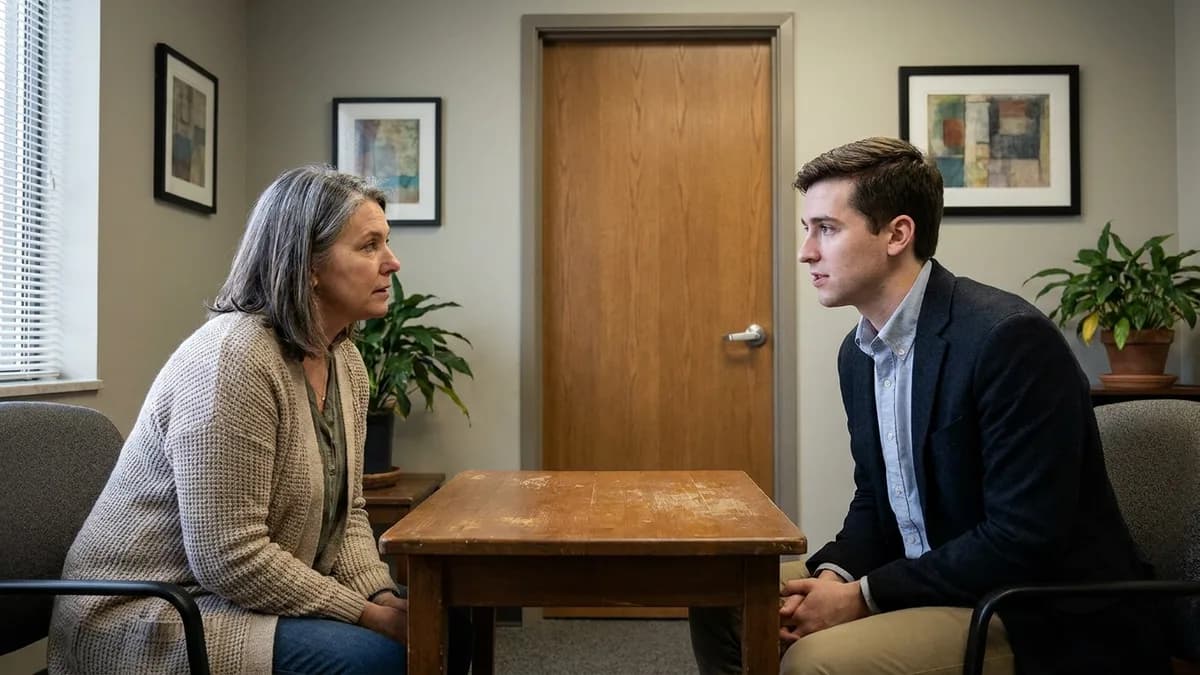
A free lawyer consultation is usually a short first meeting, often 30 minutes, where a lawyer hears your problem and decides whether to take the case. Lawyers paid only if they win money for you, such as injury lawyers, offer them most. Criminal and divorce lawyers generally can't be paid that way, so ask what their meeting costs.
This article is general legal information, not legal advice. Laws vary by state and situation, and reading it does not create an attorney-client relationship. For advice about your case, talk to a licensed attorney.
Key takeaways
- What you tell a lawyer while deciding whether to hire them stays confidential even if you never hire them (ABA Model Rule 1.18).
- If you share something that could significantly harm you, that lawyer and the firm generally can't then represent the other side in the same matter.
- On the first call, give names and a one-line summary; save the details until the firm's conflict check clears.
- Under the ABA model rule and most states' versions, contingency fees are banned in criminal defense and for divorce fees tied to the divorce or the amount of support, so those lawyers bill hourly or flat, and some charge for a first meeting.
- Bar referral services set the price of the first half hour: $20 or less through the State Bar of Texas, $25 or less through The Florida Bar and $35 through the New York State Bar Association.
How a free lawyer consultation works, step by step
The intake call or online form
Your first contact is often with intake staff or a web form rather than the lawyer. Expect questions about who's involved, what kind of problem it is and whether there's a court date. The State Bar of Texas referral service, for example, asks for the county, a basic description of the issue, and your name, zip code and phone number.
Read the wording on a web form before you type your whole story into it. Under the ABA's comments to Rule 1.18, answering a lawyer's invitation to send details usually makes you a prospective client, whose information is protected, unless the form clearly warns that it limits what the lawyer owes you. If a form says what you send isn't confidential or creates no relationship, keep it to names, the type of case and how to reach you.
The conflict check
Before a lawyer hears the details, the firm checks whether it already represents the person or business you're up against. San Diego's bar referral service describes the same first step: the lawyer or intake staff decide whether the case fits the practice and whether there's a conflict of interest.
Give the full names of everyone on the other side, businesses included, and one sentence about what happened ("my former employer hasn't paid my last two paychecks"). Hold the rest. The ABA's comments tell lawyers to limit the first conversation to what they need to decide whether to take the matter, and to tell you or decline if a conflict turns up. If the firm turns out to represent your former employer, it has then heard almost nothing about your side.
The meeting itself
Once the conflict check clears, you talk with the lawyer, in person or by phone or video. Most of the time goes to your facts and the papers you've received. By the end, the lawyer should tell you whether they can help and how they would charge, and often what they see as your options.
The ABA describes these consultations as limited in time and depth, and either of you can stop there. Don't expect the lawyer to draft or file anything yet or to read every page you bring. Any advice the lawyer does give on the merits still has to be competent.
Afterward: an engagement letter or a no-thanks letter
If you both want to go ahead, the lawyer has to explain the scope of the work and the fee, preferably in writing, before or soon after starting (ABA Model Rule 1.5(b)). A contingency agreement has to be in writing and signed by you, and it must say which expenses you'll owe even if you lose (Rule 1.5(c)). Read it before you sign.
If the lawyer turns you down, ask for that in writing and ask whether a deadline is running. The Minnesota Supreme Court's 1980 decision in Togstad v. Vesely, Otto, Miller & Keefe shows why. A woman met a lawyer for 45 minutes to an hour about a possible medical malpractice claim for her husband and wasn't billed. By her account, he said he didn't think they had a case and never mentioned the two-year deadline for such suits; she didn't see another lawyer for a year. A jury found that the meeting had created an attorney-client relationship and that the lawyer was negligent, and awarded the couple $649,500; the court upheld the verdict. A letter saying the lawyer won't represent you (often called a non-engagement letter) settles where you stand; if it mentions a deadline, act on it.

Whether the first meeting is free usually follows from how the lawyer gets paid. ABA Model Rule 1.5 sets the basic limits, and your state's version may differ.
| Practice area | How the lawyer is usually paid | What that means for the first meeting |
|---|---|---|
| Personal injury, medical malpractice | Contingency: a percentage of any settlement or award, in a written agreement you sign | The lawyer is paid only if money is recovered, so the meeting is how they decide whether the case is worth taking on. It's commonly free. |
| Criminal defense | Flat fee or hourly. The rule bars contingency fees for defending a criminal case. | Expect to discuss a price for handling your charge. Some lawyers charge for the meeting, so ask when you book. |
| Divorce, custody and support | Hourly or flat. No fee may depend on getting the divorce or on the amount of support (or a property settlement in place of it). | The lawyer bills for time, so some charge for the first meeting. Ask the price and how long it runs. |
| Wills, trusts, business formation, consumer bankruptcy | Often a flat fee for a defined job | The meeting sorts out what you need so the lawyer can quote a price for the whole job. |
"Free" covers only the meeting. With a contingency lawyer, filing fees and other case costs can still be yours win or lose, which is why the written agreement has to spell them out.
If you're charged with a crime and can't afford a lawyer, our guide on how to get a lawyer with no money explains how to ask for a public defender.
What stays confidential if you don't hire the lawyer
Once you consult a lawyer about possibly hiring them, ABA Model Rule 1.18 treats you as a "prospective client," and that protects you even if nothing comes of the meeting.
The lawyer can't use or reveal what you said, except in the narrow ways a former client's information could be used (Rule 1.18(b)). That holds however brief the conversation was.
The lawyer can also be barred from the other side. If you shared information that could significantly harm you in the matter, that lawyer can't represent someone with materially adverse interests in the same or a substantially related matter, and no one at the firm may knowingly take it on either (Rule 1.18(c)). Under Rule 1.18(d) the firm can still act if you and the other client both give informed consent, confirmed in writing, or if the lawyer you spoke with took reasonable steps not to hear more than needed, is screened off the case with no part of its fee, and you get prompt written notice. That second route is one more reason to keep the first call short.
Some firms ask you to agree, before the meeting, that nothing you say will stop them from representing another client in the matter. The ABA comments allow that with your informed consent, so read any intake agreement before you sign it.
Someone who consults a lawyer only to disqualify them isn't a prospective client under the ABA comments, and Texas wrote that into its own Rule 1.18, effective October 1, 2024. The Texas rule covers only people who consult "in good faith," and it lets the lawyer use or reveal information that has become generally known or wouldn't significantly harm you. Your state's version may differ.
Rule 1.18 is an ethics duty. Whether a court can force disclosure of what you said is a separate question of evidence law; our guide to what attorney-client privilege covers explains how privilege works and how people lose it by accident.

If you don't know whom to call, a bar association's lawyer referral service will match you with a screened lawyer who handles your kind of problem, for a set consultation fee. After that first meeting, you and the lawyer agree on any further fees.
| Service | First consultation | Length | Worth knowing |
|---|---|---|---|
| The Florida Bar Lawyer Referral Service | $25 or less | 30 minutes | Local bar associations run nine services in Florida's major cities; the Florida Bar handles the rest. Call 800-342-8011 or request online. |
| New York State Bar Association Lawyer Referral Service | $35 (the referral is free) | 30 minutes | NYSBA lists exceptions to the fee for personal injury, Social Security, medical malpractice, veterans' and military, and unemployment or workers' compensation cases. Requests are online only. Counties with their own bar service, including New York City, Nassau, Suffolk, Erie and Monroe, are sent there. |
| State Bar of Texas Lawyer Referral and Information Service | $20 or less | Up to 30 minutes | Bexar, Dallas, Harris, Jefferson, Tarrant and Travis counties have their own certified services; the State Bar serves most other counties. Call 800-252-9690. |
| San Diego County Bar Association Lawyer Referral and Information Service | Free | Up to 30 minutes | Serves San Diego, Riverside and Imperial counties. It also runs a flat-fee program for simpler matters and a modest-means program for family law disputes for people who qualify. |
At New York's service, for example, the referral staff aren't lawyers and can't give legal advice, and you're under no obligation to hire the lawyer you're sent to. Look for a service run by a bar association or certified by your state: Texas requires certification under Chapter 952 of its Occupations Code, and San Diego's service is certified by the State Bar of California. To find the one for your area, search the ABA's Lawyer Referral Directory by city and state.
What to bring
Bring copies, not originals, and keep to what bears on the problem:
- court papers, with the date you were served (check them for a response deadline);
- letters, emails or texts from the other side, an insurer or a government agency;
- the contract, lease, policy or court order the dispute is about;
- a one-page timeline with dates;
- the names of everyone involved, spelled correctly, for the conflict check.
Write your questions down as well. Our guide to questions to ask a lawyer at your first consultation has the full list, and the Consultation Prep tool builds a shorter one for your practice area.
Finding a lawyer who offers a free first meeting
Our Free Consultation Finder lets you choose one of 10 practice areas and enter your city and state, then request a free first consultation with a lawyer near you. You can also find a general practice lawyer near you in our directory and call firms yourself.
When you call, ask:
- whether the first meeting is free, and how long it lasts;
- whether you'll meet the lawyer or an assistant;
- whether you can meet by phone or video;
- what to bring.
Book right away if you've been served with court papers, arrested or charged with a crime, or sent a letter that gives you a deadline to respond or appeal. Once you've met two or three lawyers, our guide on how to choose a lawyer walks through comparing them.
Frequently asked questions
Is a phone or video consultation confidential?
Yes, in the same way an office meeting is. The ABA's comments to Rule 1.18 say written, spoken and electronic communications can all be consultations, depending on the circumstances, and the lawyer's duty not to use or reveal what you said applies to each. Take the call somewhere private, on your own phone or computer.
Do divorce lawyers offer free consultations?
Some do and some don't. Ethics rules bar divorce fees that depend on getting the divorce or on the amount of support, so family lawyers charge by the hour or a flat fee, and some charge for the first meeting. Bar referral services are another route: the New York State Bar's is $35 for 30 minutes, and San Diego's free half hour comes with a modest-means program for family disputes if you qualify.
Can I talk to more than one lawyer before hiring?
Yes. Meeting two or three lawyers is a sensible way to compare fees and fit, and each consultation is protected under Rule 1.18 as long as you're consulting in order to hire someone. Give every firm the same list of names for its conflict check, so each can tell you early whether it's free to take the case.
Will the lawyer tell me whether I have a case?
Often you'll get a preliminary view, based only on what you've said in a short meeting. Ask what facts or documents could change it, which deadline applies, and whether a no reflects the merits or just a case outside the lawyer's practice. If the answer is no, a second opinion from another lawyer is reasonable, especially when a filing deadline is close.
Sources & references
- American Bar Association: Model Rule 1.18, Duties to Prospective Client
- American Bar Association: Model Rule 1.18, Comment
- American Bar Association: Model Rule 1.5, Fees
- Supreme Court of Texas: Misc. Docket No. 24-9054, adopting Texas Disciplinary Rule of Professional Conduct 1.18 (effective Oct. 1, 2024)
- Minnesota Supreme Court: Togstad v. Vesely, Otto, Miller & Keefe, 291 N.W.2d 686 (1980)
- American Bar Association: Lawyer Referral Directory
- The Florida Bar: Lawyer Referral Service
- New York State Bar Association: Lawyer Referral Service
- State Bar of Texas: Lawyer Referral and Information Service
- San Diego County Bar Association: Lawyer Referral and Information Service
Talk to a General Practice attorney near you
This guide is general information, not legal advice. For help with your specific situation, connect with a licensed attorney — many offer a free first consultation.
Find General Practice Lawyers Near YouGeneral Practice lawyers by state
Firms our directory lists for general practice in the states where we have the most.